
Showing posts with label National Institutes of Health. Show all posts
Showing posts with label National Institutes of Health. Show all posts
Monday, June 13, 2016
Lower Blood Sugar Less Retinopathy
People with type 2 diabetes who intensively controlled their blood sugar
level during the landmark Action to Control Cardiovascular Risk in
Diabetes (ACCORD) Trial Eye Study were found to have cut their risk of
diabetic retinopathy in half in a follow-up analysis conducted four
years after stopping intensive therapy. Investigators who led the ACCORD
Follow-on Eye Study (ACCORDION) announced the results today in New
Orleans at the American Diabetes Association annual meeting. The study
was supported by the National Institutes of Health’s National Eye
Institute (NEI).


Tuesday, March 15, 2016
Using Fish and Insects to Design Contact Lenses
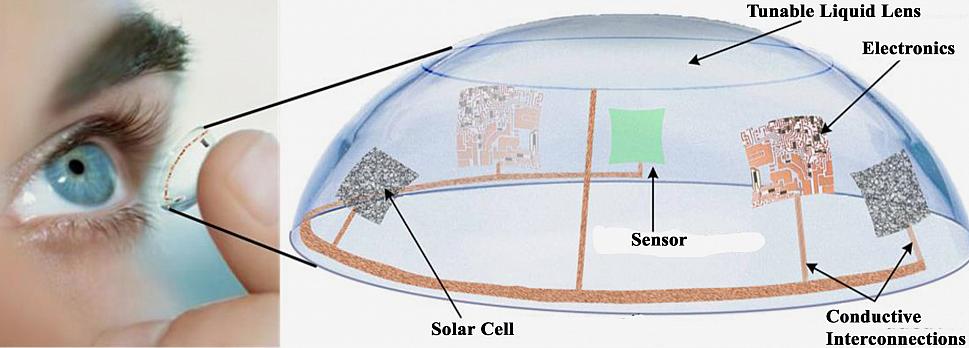 |
| Contact lens designed for presbyopia |
Wednesday, December 9, 2015
NEI Funding Robotics for Visually Impaired

Friday, February 20, 2015
Expensive Eylea Outperforms Avaastin and Lucentis, says NEI
In an NIH-supported clinical trial comparing three drugs for diabetic
macular edema (DME), Eylea (aflibercept) provided greater visual
improvement, on average, than did Avastin (bevacizumab) or Lucentis
(ranibizumab) when vision was 20/50 or worse at the start of the trial.
However, the three drugs resulted in similar average improvement when
starting vision was 20/40 to 20/32. Investigators found no major
differences in the safety of the three drugs. The trial was funded by
the National Eye Institute (NEI), part of the National Institutes
of Health. Read more on the NIH site.
Thursday, July 10, 2014
Treating AMD-Related Depression

Tuesday, June 3, 2014
Can Soft Bifocal CLs Slow Children's Myopia? NEI Study Looks to Find Out
"The University of Houston (UH) is part of a National Institutes of Health (NIH) study to determine whether commercially available, soft bifocal contact lenses slow the progression of nearsightedness in children," writes Your Houston News. "Investigators at UH and The Ohio State University (OSU) Colleges of Optometry were awarded grants from the NIH’s National Eye Institute, worth approximately $7.5 million over five years. The Bifocal Lenses In Nearsighted Kids (BLINK) Study is a multicenter randomized clinical trial that will follow nearly 300 children over the course of three years. Dr. David A. Berntsen, an assistant professor in the UH College of Optometry, is the principal investigator for the UH clinical site of this collaborative effort. Children 7 to 11 years old will be enrolled and randomly assigned to wear soft contact lenses with no reading power, soft contact lenses with medium reading power or soft contact lenses with high reading power. The investigators will measure the length of
the eye and the amount of nearsightedness to determine whether light
focused by the reading power of the soft bifocal contact lenses in front
of the retina will result in slower eye growth and, thus, slower
progression of nearsightedness." Read more.
Monday, August 26, 2013
Development Has Implication for Treatment of Amblyopia
“A study in mice reveals an elegant circuit within the developing visual system that helps dictate how the eyes connect to the brain,” reports Science Daily. “The research, funded by the National Institutes of Health, has implications for treating amblyopia, a vision disorder that occurs when the brain ignores one eye in favor of the other.” Read more.
Thursday, November 22, 2012
NIH Grant for Hand-Held Vision Scanner
"A pen-sized eye scanner could improve access to vision-related health care in the US and around the world, thanks to a grant issued by the National Institutes of Health (NIH) to Lumetrics," according to Photonics. "The medical technology company received $973,000 from the NIH’s National Eye Institute to develop the handheld digital instrument for retina inspection....The camera’s development was led by Dr. Fillip Ignatovich, Lumetric’s chief technology officer, and Dr. David Kleinman, an academic retinal specialist at the Flaum Eye Institute, also in Rochester. It was made possible through a patent invented by Dr. Steven Feldon, director of the Flaum Eye Institute, and Dr. Geunyoung Yoon of the University of Rochester." Read more.
Tuesday, August 14, 2012
NEI Issuing Awards for Ideas that Advance Vision Science

Wednesday, May 2, 2012
NEI Weighs In on the Avastin-Lucentis Debate

Sunday, August 21, 2011
NIH Study Shows 34% of School Children with Visual Problems

Subscribe to:
Posts (Atom)