Alcon has introduced Dailies Total1 Multifocal contact lenses for people
with presbyopia, notes a press release appearing on NASDAQ. This multifocal lens reportedly provides both seamless
distant, intermediate and near vision, and the outstanding comfort of
the Dailies Total1 water gradient lens technology, which is said to reduce end-of-day dryness, as the water content approaches
nearly 100% at the outermost surface of the lens. The
"hydrophilic" (water-loving) surface of the lens is almost as soft as
the surface of the cornea (corneal epithelium) to enhance
comfort, while the lens design offers a smooth progression of power designed to provide
a seamless experience between distant, intermediate and near
vision. Read more.

Showing posts with label Contact Lenses. Show all posts
Showing posts with label Contact Lenses. Show all posts
Friday, July 15, 2016


Tuesday, July 5, 2016
CooperVision Launches Contact Lenses That Reportedly Fight Digital Device Fatigue
"CooperVision has announced the launch of a mass-market contact lens designed specifically to combat digital device-related eye fatigue, according to sources in the industry." The Rochester Democrat and Chronicle reported last week. "Biofinity Energys, the name for the silicone hydrogel lens created to help thwart dry and irritated eyes, blurred vision, eye strain and other symptoms associated with technology use, was launched at the American Optometric Association’s annual meeting Wednesday in Boston....The Biofinity Energys lens combines CooperVision’s proprietary Aquaform
Technology, which prevents eye dryness, with a new optical design called
digital zone optics, which integrates layers of aspheric curves across
the front of the lens. The layers distribute more positive power across
the center of the lens to help wearers shift between on-screen and
off-screen activities without any impact to their distance vision." The lenses are available in the United States starting this month. Read more.
Friday, June 24, 2016
How Bacteria on Contact Lenses Cause Inflammation--Study Shows
"Research presented at the ASM Microbe research meeting demonstrates a new way bacteria can cause dramatic morphological changes in human cells," says Medical News Today. "Specifically, the researchers discovered that a common bacterial contaminant of contact lenses and cases can cause the formation of large bubble-like membrane structures on human ocular cells, which can contribute to contact lens wear complications and inflammation." Read more.
Tuesday, June 7, 2016
New Flat Meta-Lens Could Replace Contact Lenses
"Researchers from Harvard University have developed a new type of flat lens that could replace more cumbersome curved glass optics currently used in a wide range of imaging appliances," reports the Christain Science Monitor. "'This technology is potentially revolutionary because it works in the visible spectrum, which means it has the capacity to replace lenses in all kinds of devices, from microscopes to cameras, to displays and cell phones,' Harvard professor and researcher Federico Capasso said in a university release. Professor Capasso was also the senior author of a paper on the new technology, published in the journal Science. Capasso's planar lens is capable of processing images of objects smaller than even the best current microscopes, using a titanium dioxide-based array of nanostructures. That oxide is already used in applications ranging from skincare to white pigmentation for paints, foods, and more, and was chosen by the researchers due to its ubiquity and capacity to process light." Read more.
Google's Contact Lenses May Not Live Up to Hype, According to a Report
"The signature product from Alphabet-owned life sciences company, Verily, is still a long way from hitting the real world," according to Business Insider. "The glucose-sensing smart contact lens that Google first announced in 2014 is still just "slideware" that doesn't exist outside of PowerPoint presentations, according to a former Verily manager who spoke to Stat's Charles Piller as part of a critical look at the company's current endeavors. The contact lens project aims to provide an alternative for people with diabetes who currently have to prick their fingers to test their blood glucose levels. Instead, the lens could monitor the glucose levels in their tears. But the Stat report questions whether the lens will ever be scientifically feasible." Read more.
Wednesday, June 1, 2016
Cosplayer Risks Vision for Sake of the Game

Friday, April 29, 2016
Rigid Contact Lens Lodged in Eye for Two Years

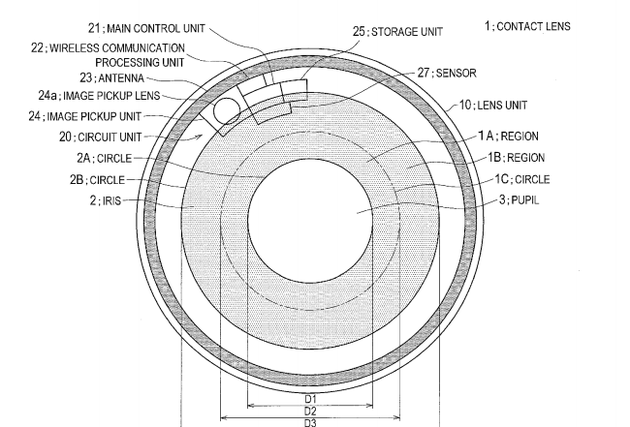
Sony Applies for Contact Lens Patent
Thursday, April 21, 2016
Major Retailers Launch a Contact Lens Campaign
Several leading national retailers today announced the launch of a new coalition and advocacy campaign reportedly to serve as a voice for American contact lens consumers. The new group, the Coalition for Contact Lens Consumer Choice, will oppose legislation recently introduced in the U.S. Senate that would severely restrict where consumers can purchase their contact lenses. The group's initial members include 1-800 Contacts, Costco Wholesale, and Lens.com. Contact lens wearers, optometrists and other eye care professionals, consumer groups, good government advocacy organizations and other retailers and industry stakeholders with diverse perspectives are being invited to join the coalition. Read more.
This follows action on Capitol Hill. "Costco Wholesale Corp., 1-800 Contacts and other retailers attacked newly proposed legislation they say would water down a federal law that opened eye doctors to competition from online sellers and discounters," says Market Watch. "The U.S. Senate bill concerning contact lens was introduced this week by Sen. Bill Cassidy (R., La.), a physician, and Sen. John Boozman (R., Ark.), a former optometrist, and is backed by the American Optometric Association as well as Johnson & Johnson and Alcon, the eye-care unit of Novartis AG." Read more. (J&J, however, has withdrawn its UPP.)
Health Care Dive reports that "the seemingly simple process of ordering contact lenses has become a tangled debate between retailers, optometric groups, and lawmakers. At the core of the debate is the contact lens prescription, a ticket to 20/20 vision for an estimated 40 million American consumers. Although the FTC enforces the requirement eye care professionals provide patients a copy of their contact lens prescriptions, as required by the Contact Lens Rule (CLR), it seems many may not be complying. 1-800-Contacts, the largest U.S. contact lens retailer, announced it filed 27,725 potential violations earlier this month with the agency related to optometrists not releasing patient prescriptions.
Cindy Williams, general counsel at 1-800-Contacts, told Healthcare Dive those violations were compiled over from December 2015 to March 2016 showing 'how extensive and widespread this problem is.'" Read more.
Contact Lens Market to Reach $13.5 Billion by 2020
Contact lenses market
is expected to grow over the forecast period owing to the increasing
prevalence of eye related diseases such as astigmatism, hypermetropia
and myopia. The other drivers of this market are increasing population,
fashion statement and technological advancement. By the end of the
forecast period, the market value will reach up to US $13.5 billion by
2020, according to a Hexa Research press release.
Wednesday, April 13, 2016
Autofocusing Contact Lenses? Maybe a Decade Away
"'Nearly everybody who wears contact lenses stops wearing them when they start to need reading glasses,' said Chris Van Hoof, Imec's program director of wearable health care," reports CNET.
"Imec hopes to adapt contact lenses so they can give your eyes a focusing boost when you're trying to see something close. The lenses themselves have regions suited for close focus and farther focus, but detect where you're trying to focus and let light through only the appropriate part of the lens." Read more.
"Imec hopes to adapt contact lenses so they can give your eyes a focusing boost when you're trying to see something close. The lenses themselves have regions suited for close focus and farther focus, but detect where you're trying to focus and let light through only the appropriate part of the lens." Read more.
Samsung Patents Smart Contact Lenses with Cameras
Thursday, March 31, 2016
Tear Study May Help Contact Lens Wearers
"When contact lenses work best, wearers forget forget they are on their eyes.
But after too many hours of wear, the lenses and the wearer's eyes dry
out, causing irritation that might outweigh the convenience of contacts.
Now researchers hope to alleviate that pain by both advancing
the understanding of how natural tears keep our eyes comfortable, and
developing a machine for designing better contact lenses," according to a post on Western Daily Press. "The work was inspired in part by a scientist's own dry eyes.
Doctor Saad Bhamla, of Stanford University in the US, said: 'As a
student, I had to stop wearing lenses due to the increased discomfort. Focusing my PhD thesis to understand this problem was both a personal and professional goal.'
The researchers suspected that most of the discomfort arises from the
break up of the tear film, a wet coating on the surface of the eye,
during a process called dewetting." Read more.
Friday, March 25, 2016
Researcher Find Contact Lenses Change Microbial Structure of the Conjunctiva
"Over 30 million Americans enjoy the technological delight of contact lenses — a number so high that it’s easy to forget how super gross contacts can actually be. Much of that is because of human error: The Centers for Disease Control report that between 40 to 90 percent of contact lens-wearers don’t properly follow the care instructions, meaning they are much more susceptible to developing inflammation infections infections like conjunctivitis and keratitis," according to a post on Inverse. "A study published today in the journal mBio could have implications for discovering why these disease risk factors exist. Researchers from New York University’s School of Medicine found that wearing contact lenses actually changes the microbial structure of the eye’s conjunctiva, causing it to become more similar to that of skin microbiot." Read more.
Medical News Today has coverage of the study as well.
Medical News Today has coverage of the study as well.
Bioengineer's Dry Eye Inspires Improvement in Contact Lenses
"After long hours of studying as a graduate student, Saad Bhamla’s eyes hurt. Contacts and intense visual focus just didn’t go together," notes Stanford Medicine's Scope blog. "He resolved to make contacts more comfortable and now, as a postdoctoral scholar in bioengineering with a PhD in chemical engineering, he’s taken a step to do just that. As reported in a Stanford News release:
"Bhamla and [chemical engineer Gerald Fuller, PhD,] suspected that most of the discomfort arises from the break up of the tear film, a wet coating on the surface of the eye, during a process called dewetting. [In a study,] they found that the lipid layer, an oily coating on the surface of the tear film, protects the eye’s surface in two important ways – through strength and liquid retention. By mimicking the lipid layer in contact construction, millions of people could avoid ocular discomfort."The engineers and their team then designed a device that mimics the surface of the eye." Read more.
After long hours of studying as a graduate student, Saad Bhamla’s eyes hurt. Contacts and intense visual focus just didn’t go together.
He resolved to make contacts more comfortable and now, as a postdoctoral scholar in bioengineering with a PhD in chemical engineering, he’s taken a step to do just that. As reported in a Stanford News release:
- See more at: http://scopeblog.stanford.edu/2016/03/24/a-bioengineers-dry-eyes-spurred-a-hunt-for-ways-to-improve-contact-lenses/#sthash.zGhbLPCc.dpuf
He resolved to make contacts more comfortable and now, as a postdoctoral scholar in bioengineering with a PhD in chemical engineering, he’s taken a step to do just that. As reported in a Stanford News release:
Bhamla and [chemical engineer Gerald Fuller, PhD,] suspected that most of the discomfort arises from the break up of the tear film, a wet coating on the surface of the eye, during a process called dewetting. [In a study,] they found that the lipid layer, an oily coating on the surface of the tear film, protects the eye’s surface in two important ways – through strength and liquid retention. By mimicking the lipid layer in contact construction, millions of people could avoid ocular discomfort.The engineers and their team then designed a device that mimics the surface of the eye,
- See more at: http://scopeblog.stanford.edu/2016/03/24/a-bioengineers-dry-eyes-spurred-a-hunt-for-ways-to-improve-contact-lenses/#sthash.zGhbLPCc.dpuf
Quality of Life Improves with Contact Lenses
"Johnson & Johnson Vision Care presented data at the scientific research symposium of the British Contact Lens Association (BCLA) held during the Netherlands Contact Lens Conference (NCC) that showed 1-Day Acuvue Moist brand contact lenses for Astigmatism (etafilcon A toric soft contact lenses (TCLs)) resulted in significant improvements to quality of life measures compared to its spherical soft contact lens (SCL) counterpart for patients with astigmatism," according to an EyeWire post. Read more.
Tuesday, March 15, 2016
Using Fish and Insects to Design Contact Lenses
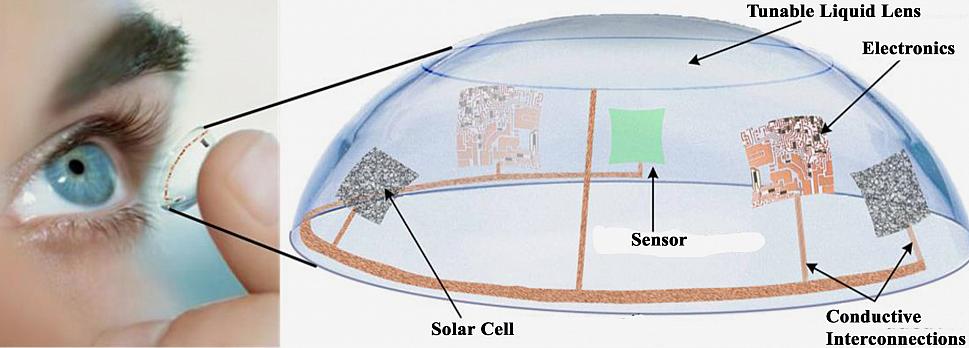 |
| Contact lens designed for presbyopia |
Saturday, March 12, 2016
1-800 Contacts Files Complaints against Arizona ODs
"One of the nation’s largest contact lens retail companies filed complaints Monday against hundreds of Arizona optometrists for allegedly failing to turn over patients’ prescriptions so they can sell them lenses," according to a Casa Grande Dispatch post. "Draper, Utah-based 1-800 Contacts filed 3,200 complaints with the state Board of Optometry, asking the board to censure or fine the optometrists or suspend or revoke their licenses. The complaints mark a new tack by the discount contact lens supplier in an ongoing battle with contact lens manufacturers and retailers over pricing.
The company alleges the optometrists failed to follow federal and state laws requiring them to provide prescriptions to a patient’s designated representative upon request. Stacey Meier, president of the state optometric association, said his members know and follow the law and that there’s no requirement that optometrists respond if the prescription is valid. He said 1-800-Contacts can fill a prescription if they don’t hear back within eight business hours under 'passive verification' rules." Read more.
The company alleges the optometrists failed to follow federal and state laws requiring them to provide prescriptions to a patient’s designated representative upon request. Stacey Meier, president of the state optometric association, said his members know and follow the law and that there’s no requirement that optometrists respond if the prescription is valid. He said 1-800-Contacts can fill a prescription if they don’t hear back within eight business hours under 'passive verification' rules." Read more.
Friday, March 4, 2016
Maryland AG Files Antitrust Complaint against Johnson & Johnson Vision Care
“The nation's largest maker of contact lenses is being accused of violating Maryland's antitrust law by conspiring with retailers to set a higher minimum price for their products, Attorney General Brian E. Frosh announced today,” reports Southern Maryland Online. “Attorney General Frosh said that the Office of the Attorney General Antitrust Division has filed a civil complaint charging Florida-based Johnson & Johnson Vision Care Inc., the makers of Acuvue lenses, with violations of the Maryland Antitrust Act. The complaint seeks civil penalties and an end to the anti-competitive pricing policy.” Read more.
Alcon to Sponsor Eurovision Song Contest

Subscribe to:
Posts (Atom)