
Showing posts with label amblyopia. Show all posts
Showing posts with label amblyopia. Show all posts
Wednesday, November 25, 2015
Amblyopia Causes Slow Reading in Children
"Children with amblyopia, commonly known as 'lazy eye,' may have impaired ocular motor function," reports Medical News Today. "This can result in difficulties in activities for which sequential eye movements are important, such as reading. A new study conducted at the Retina Foundation of the Southwest determined that children with amblyopia read more slowly than children with normal vision or with strabismus alone. Their findings are published in the Journal of the American Association for Pediatric Ophthalmology and Strabismus (AAPOS)." Read more.


Wednesday, August 26, 2015
Amblyopia "Drives" Information from the "Good" Eye
Sunday, July 13, 2014
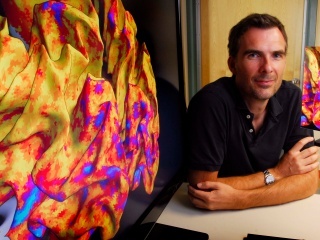
New Scanner Helps Diagnose Amblyopia and Strabismus
A new clinical study published in in JAMA Ophthalmology has identified REBIScan's Pediatric Vision Scanner (PVS) as superior approach to testing preschool children for amblyopia and strabismus. Study author Reed Jost, senior author Dr. Eileen Birch, and their colleagues from the Retina Foundation of the Southwest tested 300 children using the PVS (and also using Welch Allyn's SureSight autorefractor), and then examined the children individually. In an independent study supported by the Thrasher Research Fund, they found that the PVS significantly outperformed the SureSight in sensitivity, identifying 97% of children affected by the targeted conditions, and made significantly fewer unnecessary referrals of healthy children (better specificity). Read more.
Monday, August 26, 2013
Development Has Implication for Treatment of Amblyopia
“A study in mice reveals an elegant circuit within the developing visual system that helps dictate how the eyes connect to the brain,” reports Science Daily. “The research, funded by the National Institutes of Health, has implications for treating amblyopia, a vision disorder that occurs when the brain ignores one eye in favor of the other.” Read more.
Thursday, August 1, 2013
Hope Found for Effective Treatment of Amblyopia
"A new discovery by a University of Maryland-led research team offers hope for treating 'lazy eye' and other serious visual problems that are usually permanent unless they are corrected in early childhood," according to Science Digest. "During the so-called "critical period" when a young child's brain is adapting very quickly to new experiences, the brain builds a powerful neural network connecting the stronger eye to the visual cortex. But the weaker eye gets less stimulation and develops fewer synapses, or points of connection between neurons. Over time the brain learns to ignore the weaker eye. Mild forms of amblyopia such as 'lazy eye' result in problems with depth perception. In the most severe form, deprivation amblyopia, a cataract blocks light and starves the eye of visual experiences, significantly altering synaptic development and seriously impairing vision." Read more.
Thursday, February 14, 2013
Fixing Amblyopia --in Kittens
"Restoring vision might sometimes
be as simple as turning out the lights. That's according to a study
reported on February 14 in Current Biology, a Cell Press
publication, in which researchers examined kittens with a visual
impairment known as amblyopia before and after they spent 10 days in
complete darkness,” reports Science Daily. “Researchers
Kevin Duffy and Donald Mitchell of Dalhousie University in Canada
believe that exposure to darkness causes some parts of the visual
system to revert to an early stage in development, when there is
greater flexibility.” Read more.
Wednesday, October 17, 2012
New Insights into Lazy Eye
"Little is known about oculomotor
function in amblyopia, or 'lazy eye,' despite the special role of eye
movements in vision," notes Science Daily. "A group of scientists has discovered that abnormal
visual processing and circuitry in the brain have an impact on
fixational saccades (FSs), involuntary eye movements that occur during
fixation and are important for the maintenance of vision. The results,
which raise the question of whether the alterations in FS are the cause
or the effect of amblyopia and have implications for amblyopia
treatment, are available online in advance of publication in the
November issue of Restorative Neurology and Neuroscience." Read more.
Monday, October 24, 2011
Video Games Helps with Treating Amblyopia
MedicalNewsToday reports that "a new study conducted in an eye clinic in India found that correction of amblyopia,
also called "lazy eye," can be achieved in many older children, if they
stick to a regimen that includes playing video games along with
standard amblyopia treatment. At the 115th Annual Meeting of the
American Academy of Ophthalmology, Dr. Somen Ghosh reported on the
approaches that allowed about a third of his study participants, who
were between 10 and 18 years old, to make significant vision gains." Read more.
Thursday, October 13, 2011
Blocked Tear Eye Increases Rick of Amblyopia

Friday, October 7, 2011
Glasses as Sole Therapy Work with Strabismic & Amblyopia

Thursday, September 8, 2011
Playing Video Games Decreases Effects of Amblyopia

Thursday, January 20, 2011
Is 3D Eyewear Dangerous? AAO Says...
MedicalNewsToday reports the following summary of a statement by the American Academy of Ophthalmology (AAO) regarding the use of 3D eyewear:
At this time there are no conclusive studies on the short- and/or long-term effects of 3-D digital products on eye and visual development, health, or function in children, nor are there persuasive, conclusive theories on how 3-D digital products could cause damage in children with healthy eyes. The development of normal 3-D vision in children is stimulated as they use their eyes in day-to-day social and natural environments, and this development is largely complete by age three years.The AAO did issue precautions about children with amblyopia, strabismus, and focus inhibiting conditions.
Tuesday, December 14, 2010
Lazy Eye Solved with a Pin Prick
MedicalNewsToday reports that "acupuncture may eventually become another optional treatment apart from patching for lazy eye, also known as amblyopia, especially among older children who have a poorer response to patching, say researchers from China in Archives of Ophthalmology. Approximately 0.3 to 5% of people globally are affected by lazy eye, the authors report as background information."
Subscribe to:
Posts (Atom)