

Thursday, October 4, 2012
Vision Map of Brian Completed


ESA and Vision Council Merge
The European Sunglass Association (ESA) and The Vision Council announced
their intent to merge. Both parties signed a comprehensive Joint
Operating Agreement – effective immediately – with the goal of fully
merging the ESA into The Vision Council within 12 months. Read more.
More Warnings about Decorative CLs

Scientists Find Cause of River Blindness

Take an OAA Survey about the Future of Opticianry

Easier Eval of Dry Eye
" A simple test of eyelid sensitivity may help vision professionals in evaluating one of the most common eye-related symptoms: dry eyes," according to Science Daily. "A new study linking increased eyelid sensitivity to decreased function of the eyelid margins is presented in the October issue of Optometry and Vision Science." Read more.
Marchon Acquires Scandinavian Eyewear

 Marchon Eyewear, Inc., has acquired Scandinavian Eyewear. Established in 1948, Scandinavian Eyewear has been designing optical frames for almost 65 years and has been a leader in the Nordic region. Scandinavian Eyewear’s proprietary brand, SKAGA, has made a distinctive mark in the eyewear industry. The acquisition will allow Marchon to penetrate the prominent share the company has in the Scandinavian market and broaden the distribution of proprietary and licensed brands worldwide. Read more.
World Sight Day--Oct. 11

October 11th is World Sight Day, an observance of the global effort to fight eye disorders and improve the lives of those suffering with these disorders. Ninety percent of the world’s blind live in developing nations, where multiple factors contribute to higher prevalence of blindness and visual impairment, such as Vitamin A Deficiency, River blindness and infections such as trachoma, the leading causes of preventable childhood blindness.
Americans can help by supporting international nonprofit groups based in the US, with financial donations and volunteer community projects. The International Agency for the Prevention of Blindness also provides a list of worthwhile organizations for people interested in providing support. Why not attempt a promotion that gets your customers involved?
A Cup of Joe Could Lead to Glaucoma
"A new study. published in Investigative Ophthalmology & Visual Science, suggests coffee drinkers may need to reconsider their coffee intake to decrease their probability of developing vision loss or blindness," according to Medical News Today. "Author of this study, the first of its kind done within a U.S. population, Jae Hee Kang, ScD, of Channing Division of Network Medicine at Brigham and Women's Hospital in Boston, Mass., explains: 'Scandinavian populations have the highest frequencies of exfoliation syndrome and glaucoma. Because Scandinavian populations also have the highest consumption of caffeinated coffee in the world, and our research group has previously found that greater caffeinated coffee intake was associated with increased risk of primary open-angle glaucoma, we conducted this study to evaluate whether the risk of exfoliation glaucoma or glaucoma suspect may be different by coffee consumption.'" Read more.
Blinded by Memory
"Trying to keep an image we've just seen in memory can leave us blind to things we are 'looking' at, according to the results of a new study supported by the Wellcome Trust," reports Medical News Today. "It's been known for some time that when our brains are focused on a task, we can fail to see other things that are in plain sight. This phenomenon, known as 'inattentional blindness', is exemplified by the famous 'invisible gorilla' experiment in which people watching a video of players passing around a basketball and counting the number of passes fail to observe a man in a gorilla suit walking across the centre of the screen. The new results reveal that our visual field does not need to be cluttered with other objects to cause this 'blindness' and that focusing on remembering something we have just seen is enough to make us unaware of things that happen around us. " Read more.
Midwest ODs Getting Paid Again by Medicare
A Medicare administrative contractor (MAC) reversed course on Monday and announced that it would withdraw a restrictive, anti-optometry coverage directive that wrongly sought to limit the scope of practice of optometrists in nine states, according to the American Optometric Association (AOA). Wisconsin Physician Services (WPS) — the MAC servicing Illinois, Indiana, Iowa, Kansas, Michigan, Minnesota, Missouri, Nebraska and Wisconsin — had issued an “optometry services” coverage determination whereby the contractor created a list of services it determined optometrists are allowed to provide based on its own interpretation of state law. With backing from a Medicare regional office, WPS then utilized the directive to deny payment for services provided to Medicare beneficiaries. Read more.
White House Honors OD
Sports vision optometrist Paul Berman, O.D., was honored at the White House Oct. 2 for his work as the founder and global clinical adviser of the Special Olympics Lions Clubs International Opening Eyes program, which provides vision testing and eyewear for intellectually challenged individuals. Read more.
Digital Lens for Spy Eyewear
PFO Global is teaming up with SPY to create a digital lens for SPY eyewear, according to an Eye Surf post. The blog notes, "SPY’s ARC lens (accurater radius curvature) provides optically correct, distortion-free viewing at all angles...[the] digital Rx program will begin with an ophthalmic line of SPY complete eyewear" order at spydigitalrx.com Read more.
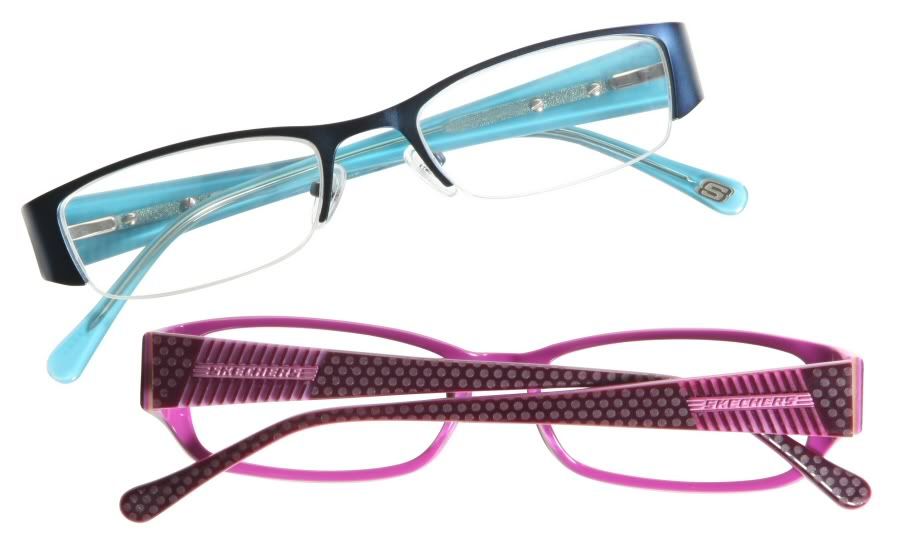
Skechers Fall/Winter 2012
Wednesday, October 3, 2012
Hope for Patients with Wet Macular Degeneration
"The advanced neovascular, or 'wet,' form of age-related macular degeneration (AMD), left untreated, is the most common cause of vision loss among the elderly and a leading reason for their loss of driving privileges," notes Science Digest. "But results of a new study, published in the online version of the journal Ophthalmology, suggest that monthly injections of ranibizumab improve eye chart test results required for a driver's license, build driver confidence and keep those with AMD driving longer." Read more.
Charmant Adds 2 Styles

Wiley X Raising Money for Breast Cancer Research

Tuesday, October 2, 2012
SoloHealth Putting 500 Health Kiosks in Sam's Clubs
SoloHealth and Sam's Club announced last week that they will being installing SoloHealth
Station bi-lingual, self-service kiosks in 500 Sam's Club during the next several weeks. SoloHealth predicts that more than 2,500 retail locations
by mid-2013.The
device provides health screenings for vision, blood
pressure, weight, and body mass index, a symptom checker as well as an
overall health assessment free of charge.The kiosk will reportedly help connect
consumers to local professionals through its databases. Read more.
The interesting question is: Will these kiosks refer individuals with vision problems to optical shops in Wal-Mart stores? It would create a neat little feeding system. So opticians might want to take one of these units for a test ride and find out what the competition is offering.
The interesting question is: Will these kiosks refer individuals with vision problems to optical shops in Wal-Mart stores? It would create a neat little feeding system. So opticians might want to take one of these units for a test ride and find out what the competition is offering.
Reducing Myopia in Children with Specialty CLs
Myopia affects more than 40 percent of people in
the U.S. and up to 90 percent of children in some parts of Asia. The
problem begins in childhood and often progresses with age. Standard
prescription lenses can correct the defocus but do not cure myopia and do not slow progression rates as children age. But
recent experimental work by biomedical scientist David Troilo and
colleagues at the State University of New York (SUNY) College of
Optometry in New York City supports the development of a potential cure
for myopia by using specialty contact lenses that coax the eye to grow
in a way that can correct nearsighted vision while reducing myopia
progression. Troilo will describe his findings at the Optical Society’s (OSA)
Annual Meeting, Frontiers in Optics (FiO)
2012, taking place Oct. 14–18 in Rochester, N.Y. Read more.
Saving $202 Billion Annually with Eyewear
"Restoring sight would save global economy US$202 billion each year," according to Science Codex. "Governments could add billions of dollars to their economies annually
by funding the provision of an eye examination and a pair of glasses to
the estimated 703 million people globally that needed them in 2010
according to a new study to be released soon. The health economics study calculated that there would be a saving of
US$202 billion annually to the global economy through a one-off
investment of US$28 billion in human resource development and
establishing and providing vision care for 5 years. The investment
would establish the eye care services to provide good vision to people
with uncorrected refractive error, enabling greater workplace output and
increasing gross domestic product." Read more.
Subscribe to:
Posts (Atom)