Transitions Signature Flat Top 28 Polycarbonate Composite lenses are now available exclusively from Younger Optics, according to an email from Younger.Its photochromic Trivex layer uses Chromea 7 technology. The lens, which has an 1.59 index like polycarbonate, reportedly has superb segment cosmetics.
Transitions Optical uses a proprietary process to make polycarbonate lenses photochromic. While this process works for a variety of lens geometries, it is not compatible with segmented, or flat-top lenses such as bifocals and trifocals. This has meant that traditionally, a polycarbonate FT28 lens has not been available with Transitions® technology. Until now. Younger Optics and Transitions Optical have developed a polycarbonate composite lens that incorporates a thin photochromic front surface bifocal layer made of Trivex — resulting in a lens delivering Transitions Signature performance in a product that is surfaced, polished, edged and dispensed just like a clear polycarbonate lens.

Showing posts with label Transitions. Show all posts
Showing posts with label Transitions. Show all posts
Monday, June 29, 2015


Friday, March 13, 2015
Transitions' Marketing Aimed at Younger Consumers

Tuesday, May 27, 2014
New Guide Available from Younger Optics

Monday, July 29, 2013
Essilor Takes Control of Transitions
“PPG Industries Inc (PPG.N) has agreed to sell its $1.73 billion controlling stake in Transitions Optical, the inventor of modern variable-tint plastic lenses, to business partner Essilor International (ESSI.PA), PPG said on Monday,” according to a Reuters post. “Essilor…already holds 49 percent interest in Transitions Optical….The deal will help Essilor boost expansion in the variable-tint lens market, which is growing twice as fast as the optical industry as a whole, mainly in Asia, Latin America and Europe.” Read more.
Tuesday, March 19, 2013
Poor Link between Ethnicity and Eye Health Risks, Study Shows
“Transitions Optical released survey results here at Vision Expo East that show Americans continue to exhibit a poor understanding of the link between ethnicity and eye health risks,” reports Healio Optometry. “Three out of four respondents to the survey said that seeing their best is important to them; nine out of 10 agreed that seeking regular eye care is a priority; but just four in 10 visited their eye care professional within the past year. The number was even less for certain ethnic groups, including African Americans and American Indians, the survey said.” Read more.
Wednesday, January 2, 2013
Transitions Implements a More Intense Marketing Campaign
Transitions Optical is expanding its Official Sponsor of Sightseeing program in 2013.For this program, the company is turning to Neolane and The Marketing Store Worldwide to support its CRM efforts, expand its social integration, and grow its cross-channel communications efforts. Transitions wants access to its database and test marketing campaigns regularly. Working with The Marketing Store Worldwide, Transitions is implementing Neolane’s conversational marketing platform. Therefore, Transitions will create an integrated, cross-channel approach including the integration of social media marketing (i.e. Facebook, Twitter). Additionally, the lens company will have access to advanced reporting and analytics capabilities to obtain deeper customer insight. As such, the company will be able to gather, track, and analyze data to better understand where its marketing efforts are working and where they can most benefit from changes or improvements. Read more. What could that mean for you? A marketing program that better informs the best potential customers for Transitions lenses, which should make an ECPs job easier.
Thursday, October 11, 2012
World's Largest Mosaic for World Sight Day

Transitions and VSP Running Clinic in Houston
Transitions Optical, in partnership with VSP Vision Care, will visit the Houston area this week with 40-foot, state-of-the-art mobile vision clinic, nicknamed "Eyenstein," to help hundreds of children start the school year with free eye exams and if needed, prescription eyeglasses – to reinforce the connection between healthy vision and the ability to read and learn. Read more.
Thursday, May 17, 2012
How to Pitch Patient on a Photochromic, Polarized Progressive
Transitions offers a video about presenting its photochromic, polarized progressive lens--Vantage, which the company introduced late last year.
Friday, April 27, 2012
Nike and Transitions Team Up

Wednesday, March 7, 2012
Nike MAX Transitions at PGA Merchandise Show
Saturday, March 3, 2012
Transitions PR Campaign for Eye Health of Minorities Wins Award

Monday, February 6, 2012
Aging Workforce Not Taking Advanage of Vision Benefits

Saturday, December 17, 2011
Transtions and Dr. Aliza Start Hispanic Channel
Milagro Charter School students helped unveil today the new Salud Visual
channel, a collaboration between Transitions Optical, Inc. and Dr.
Aliza Lifshitz. Designed as the first online channel in Spanish written for U.S.
Hispanic audiences, Salud Visual Channel provides eye health information
from a medical, yet user-friendly point of view. The Channel is hosted
within http://www.vidaysalud.com. Read more.
Tuesday, November 1, 2011
Transitions Cancels Its PGA Sponsorship after 2012
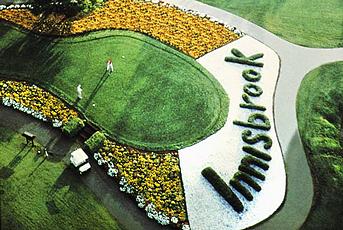 |
| Transitions will cancel its PGA sponsorship. |
Thursday, July 14, 2011
Transitions Study Says Americans Aren't Caring for Their Eyes

Survey results also suggest that ethnic minority groups may not be taking adequate steps to protect their vision. For example, although Hispanics responded the most in-line with the general population, they were still more likely to believe that UV protection is only important in the spring and summer months, and were less likely to say that "eye health protection" is an important consideration when selecting eyewear.
While African Americans were the most likely to say they would schedule an eye exam if experiencing symptoms of vision problems such as near-sightedness or presbyopia (loss of ability to focus and see things up close), they were also the most likely to do nothing to protect their eyes from UV rays despite their increased risk of developing cataracts.
Despite research confirming that Asian Americans are at higher risk for developing near-sightedness, they were the least likely (six out of 10) to say they would make an eye appointment if having trouble seeing far away. They were not only the most likely demographic group to believe that UV protection is only important in the spring and summer months, but were also the most likely to believe that wearing eyeglasses can make their vision get worse.
Wednesday, July 6, 2011
Transitions Team Leads Tour de France

"Thor Hushovd of the Transitions Optical sponsored cycling team, Garmin
Cervélo, continues to defend the yellow jersey in the 98th Tour de
France after a gritty performance by the world champion in the third
category hill climb of Stage 4 on Tuesday," according to a MiVision post.
Subscribe to:
Posts (Atom)