Showing posts with label low vision. Show all posts

Saturday, May 7, 2016

New Device Helps with Low Vision


"A miniature camera using optical character-recognition technology, mounted onto the eyeglasses of people who are considered legally blind, dramatically improves their ability to read an email, newspaper article, menu or page in a book, a study by researchers with UC Davis Health System has found," according to Science Daily. "Using the device the study participants were significantly better able to perform activities of daily living. The device recognizes text and reads it to the user using an earpiece that transmits sound, and can also be programmed to recognize faces and commercial products." Read more. 

Wednesday, January 28, 2015

Prevent Blindness Launches Low-Vision Aid Purchasing Program Online

Enablemart - With Every Purchase, Help Prevent Blindness and Preserve Sight.
Visitors to Living Well with Low Vision, lowvision.preventblindness.org, can purchase low-vision aids and products through Enablemart.com. The company will donate 5% of every purchase made through lowvision.preventblindness.org to Prevent Blindness. Prevent Blindness launched Living Well with Low Vision to address the needs of individuals with low vision and their caregivers. The website was specifically developed from the point of view of individuals facing the challenges of vision loss. Read more.

Wednesday, June 25, 2014

New Approaches Needed for People with Low Vision

"New approaches and tools are needed to improve visual accessibility for people with low vision in the 'real world,' according to a special article in the July issue of Optometry and Vision Science, official journal of the American Academy of Optometry." That's the start of a post on Science Daily. Read more.

Monday, September 23, 2013

New Website for People with Low Vision

Prevent Blindness America has launched a new online resource: Living Well with Low Vision, lowvision.preventblindness.org.  The goal of the site is to make it as easy as possible for people to educate themselves about vision loss, to meet the challenges resulting from it, and to maintain their quality of life. The site is said to be developed from the point of view of patients and their advocates, making it a good resource for any customer dealing with the issues that come with low vision.  Read more.

Wednesday, March 20, 2013

New NEI Materials to Help Patients Cope with Low Vision

Eye care professionals can help patients deal with low-vision thanks to a 20-page large-print booklet and a series of videos released during Low Vision Awareness Month (Feb.) by the National Eye Institute (NEI), reports the American Optometric Assn. The booklet, “Living with Low Vision: What you should know,” urges people with low vision to seek help from a low vision specialist and provides tips to maximize remaining eyesight. Patients and ECPs can view and download the booklet and videos at www.nei.nih.gov/lowvision.

Thursday, February 28, 2013

Vision Council Creates Site for Low Vision


The Vision Council has launched a website covering low vision: www.whatislowvision.org. Its goal: to educate the public on low vision, its symptoms, and the resources available to help. As America's baby boomers enter their senior years, they may notice a gradual loss in some areas of sight. Loss of peripheral or central vision could indicate low vision, a visual impairment that cannot be corrected with eyeglasses, contact lenses, pharmaceuticals or surgery. More than 2.9M people in the U.S. suffer from low vision and it is most common in people age 60+.

Monday, February 11, 2013

NEI Launches New Low Vision Program

Last week—at the start of Low Vision Awarness Month (February)—the National Eye Institute released a 20-page large-print booklet and a series of videos to help people adapt to life with low vision. The booklet, Living with Low Vision: What You Should Know, urges people with low vision to seek help from a low vision specialist and provides tips to maximize remaining eyesight. The videos feature patient stories about living with low vision. A video for health care professionals emphasizes the importance of explaining the rehab services available to individuals with vision loss, which a 2012 report estimates at 2.9 million American. The NEI says that will increase 72 percent by 2030. Statistics on low vision are taken from the report, 2012 Fifth Edition of Vision Problems in the U.S., available on the NEI website at http://www.nei.nih.gov/eyedata. The new NEI booklet and videos along with other resources for people with low vision can be viewed and downloaded at http://www.nei.nih.gov/lowvision.

Saturday, December 24, 2011

Tablets & Smart Phones Good Low Vision Aids

"New technology such as smartphones and tablet computers can offer the estimated 21 million people in the United States who have low vision a chance at improved sight, vision experts say. People with low vision have extremely limited sight that interferes with daily activities. Those vision losses can’t be corrected with eyeglasses, contact lenses, medication or surgery, according to www.visionaware.org." So goes the post on UticaOD. "But technological devices can improve the useful vision of low-vision patients by enlarging print and images, said Dr. Robert J. Blumthal, an optometrist working with low-vision patients at The Prairie Eye Center in Springfield, Ill." Read more.
.

Tuesday, November 8, 2011

Helping Kids with Low Vision
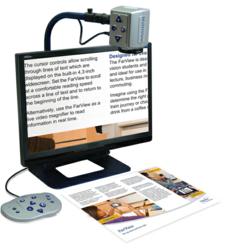
Optelec, Spectrios Institute, and Sight Savers America donated assistive technology to help children see things they never dreamed possible. These children, ages 7-16, have severe vision impairments such as Aniridia, Rod-Cone Dystrophy, Nystagmus, Ocular Albinism and other conditions contributing to vision loss. Most of the children can be helped and their vision greatly effected by placing highly specialized vision aids in their homes. This equipment is costly and is not covered by insurance. That’s where the coalition steps in. Read more.